
by RYAN MILEJCZAK
Sponsored by Farm Credit of Central Florida
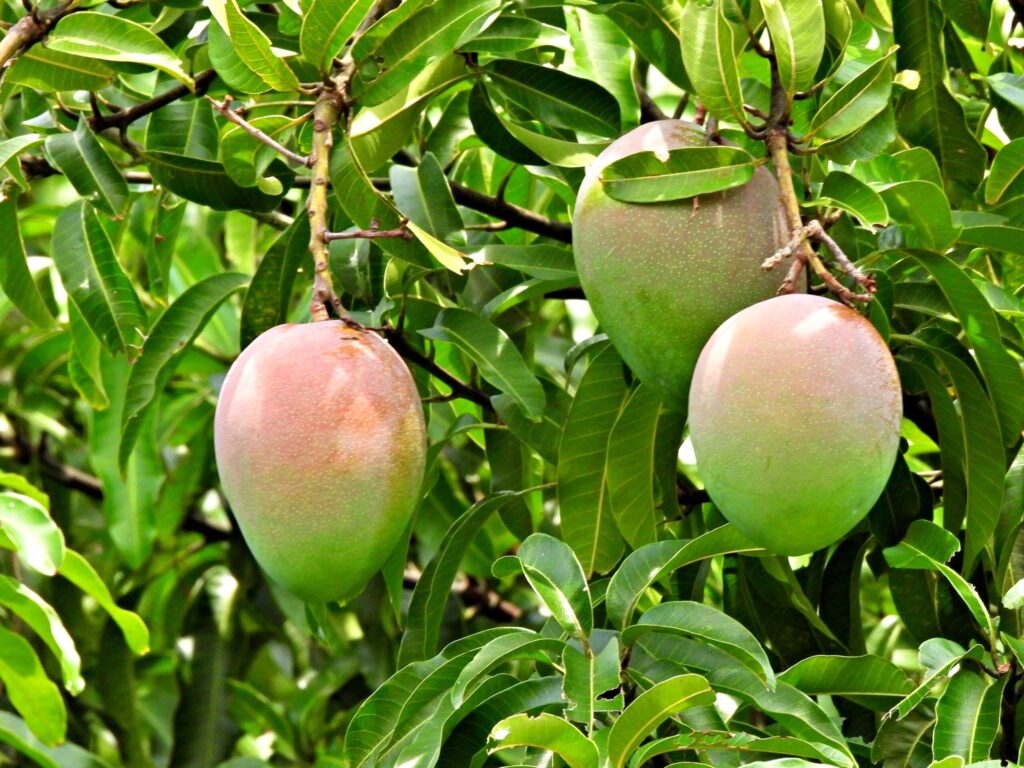
Florida’s mango industry is small but influential. While the state isn’t a major producer on the world stage, it is the largest producer in the U.S., and Florida growers have developed many of the most commonly grown varieties found in stores today.
Perhaps the most notable of these is the Tommy Atkins, which is the most popular mango cultivar in the country. It’s the most extensively planted variety not only in Florida, but also the Americas at large.
Other notable Florida-born varieties include Kent, Haden, and Keitt. The original Haden tree, planted in Coconut Grove in 1910, is the ancestor of most of the commercial mangos people eat today. Today, cultivar and genetic research continues at UF/IFAS Tropical Research and Education Center in Homestead to develop new varieties, and a number of other individuals and organizations also work to develop new varieties across the state.
Due to its small size, Florida’s mango industry focuses on “quality over quantity,” growing specialty varieties. Many operations grow a huge variety of cultivars. In fact, Tropical Acres Farms in South Florida grows more than 300 specialty cultivars!
Thriving in the Heat & Humidity
Mangoes are grown commercially primarily in South Florida, with smaller amounts of production occurring in Central Florida. They thrive in the warm, humid climates of the hottest parts of the state and have extremely low resistance to freezing temperatures, limiting how far north they can be grown.
Mango trees can be grown from seed or by vegetative propagation, depending on the variety. “Indian” type mangos, which feature multi-colored fruits, are typically grafted, while “Indochinese” types feature solid yellow, green, or orange coloring and can be grown from seed.
A number of diseases can affect mango trees. The most significant in Florida is the anthracnose fungus, which attacks flowers, young fruits, leaves, and twigs, leading to black lesions that cause blossom blight, leaf spotting, and fruit rot. Thankfully, few insect pests are a major concern for growers, though a few such as pyriform scales and Florida red scale can cause damage.
As of 2022, there are 3,644 acres dedicated to mango cultivation in Florida, across 1,103 farms. This is up from 2,672 acres across 921 farms in 2017, a 36.4% increase. Florida mango cropland has declined since its peak of 2,900 acres in 1989, so this may represent a reversal of that trend.
Florida produces about 58.8 million pounds of mangoes annually, with an estimated value of about $20.49 million. Florida mango season runs from May to September, and a single mature tree can yield as much as 330 pounds of fruit.
Like with many Florida crops, the 2026 story revolves around the severe freeze our state experienced in late January and early February. While exact numbers for losses in the mango industry aren’t available, the total damage to our state’s ag industry was estimated at more than $3 billion.
Because they’re sensitive to the cold, even a few hours of temperatures colder than 40 F can kill flowers and small fruits. The freeze struck during peak flowering, rapidly killing early blossoms and causing significant losses for growers. However, mid-to-late mango varieties were able to rebloom, allowing growers to still have a crop, albeit a delayed one.
Despite these setbacks, the state’s growers continue to push forward, and the late-season varieties now coming in should keep farm stands and specialty markets stocked through at least August. For a small industry that has weathered hurricanes, freezes, and decades of shifting market pressure, persistence is nothing new. Florida’s mango growers have carved out a niche by focusing on what they do best: growing varieties you can’t get anywhere else, and getting them straight from the grove to the customer.