
by RYAN MILEJCZAK
Sponsored by Farm Credit of Central Florida
Few things are better on a hot day than a sweet, juicy cantaloupe. Whether in a fruit salad, wrapped in prosciutto, or just biting into a slice, it’s one of summer’s best fruits. Better yet, it’s grown right here in Florida!
What Is a Cantaloupe? It’s Not As Simple As It Seems!
If you traveled back in time and asked for a cantaloupe, you’d probably be surprised by the fruit that gets handed to you.
Originally, the term cantaloupe referred to what is now called the “true” or “European cantaloupe,” a green, ribbed variety of true melon (Cucumis melo) that takes its name from the Italian town of Cantalupo.
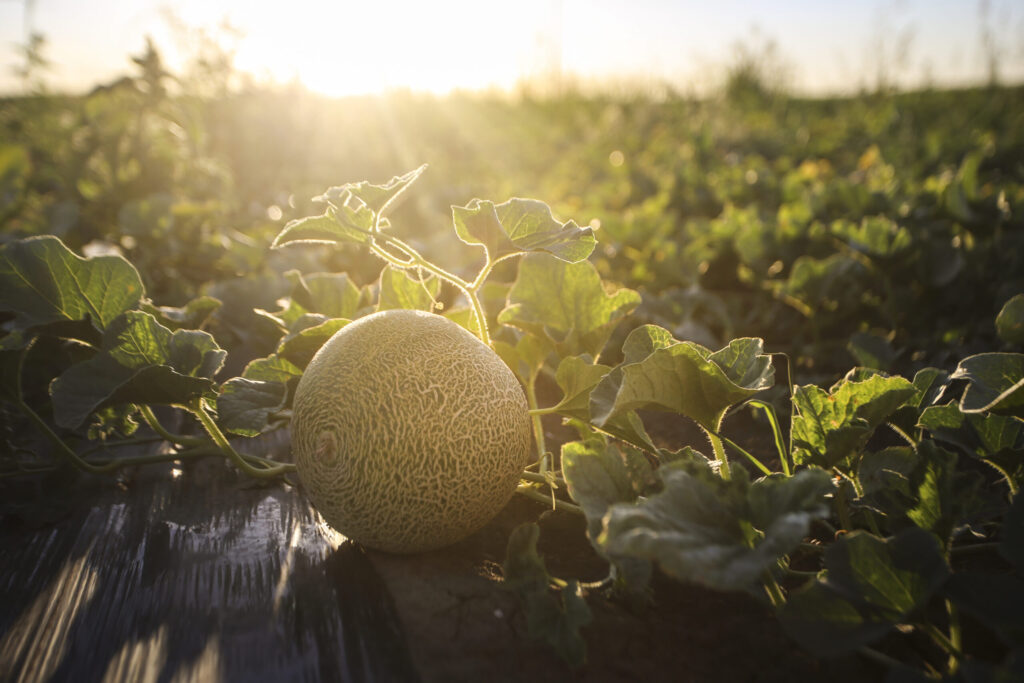
Now, however, it refers to the cantaloupe we know today with its heavily webbed skin and rich orange interior. This cantaloupe is also a true melon, simply of a different variety, sometimes called an “American cantaloupe.”
Despite this name, the cantaloupe is descended from melons first cultivated in the old world, rather than being native to the Americas.
Whichever variety you’re talking about, the cantaloupe is a member of the Cucurbitaceae, along with fruits like watermelons, honeydew melons, and veggies like squash, cucumber, and chayote. The fruits are botanically a type of berry called a “pepo,” with a hard outer rind and an undivided interior. Like other melons, cantaloupe — also known as a muskmelon or rockmelon — grow on trailing vines.
The U.S. is a major cantaloupe producer, with nearly $300 million worth of cantaloupe produced nationwide in 2021. It’s grown throughout the U.S. in places like California, Georgia, and — of course — Florida. Americans also have a big appetite for the fruit; Americans consume around 6 pounds of cantaloupe per person annually!
Where Central Florida Shines
Florida produces about 3% of the nation’s total cantaloupe, with $9.56 million worth of cantaloupe sold in the 2021 season, according to the most recent numbers available. This places Florida 12th overall for cantaloupe production in the U.S. About 1,500 acres of Florida land are devoted to cantaloupe production.
Cantaloupe production in the Sunshine State is focused in Central Florida, particularly Hillsborough, Polk, Collier, Hendry, Hardee, and Manatee Counties. These counties feature the perfect environment for growing cantaloupe thanks to the heat, sun, and soil type. Common varieties include Ambrosia, Athena, Honey Rock, Galia, and Minnesota midget.
Cantaloupe is often grown on farms that specialize in other crops. In Hillsborough, many strawberry growers plant cantaloupe after their strawberry harvest.
Fruit is generally planted sometime between December and April, depending on region. They take 85-110 days to reach harvest and prefer fertile, well-drained, slightly acidic, sandy loam soil. The plant has separate male and female flowers which require pollination by bees to produce fruit. Care needs to be taken to avoid overwatering, which reduces the sugar content of maturing fruit.
Picking the Perfect Melon
Florida cantaloupe season runs from April to June, with fresh cantaloupe available in markets and grocery stores around the state.
To select a good cantaloupe, look for fruit that’s heavy for its size, free of blemishes, and sweetly fragrant (but not overpowering; this indicates an overripe cantaloupe). They should be firm except for a slightly soft “button” on one end. Once purchased, enjoy it within a few days for best flavor, or put it in the fridge for up to a week to keep it longer.
A raw cantaloupe is 90% water, with a small amount of carbs and protein. Thanks to the beta-carotene that gives its orange color, it’s a rich source of vitamin A, with 100 grams providing 26% of the daily recommended value. It is also a good source of vitamin C, as well as providing smaller amounts of other essential vitamins and minerals. Cantaloupe is also rich in antioxidants; in addition to beta-carotene, it also provides cryptoxanthin, cucurbitacin, lutein, and zeanthin.
Next time you’re at the grocery store, don’t forget to grab some Florida-fresh cantaloupe while they’re still in season!